
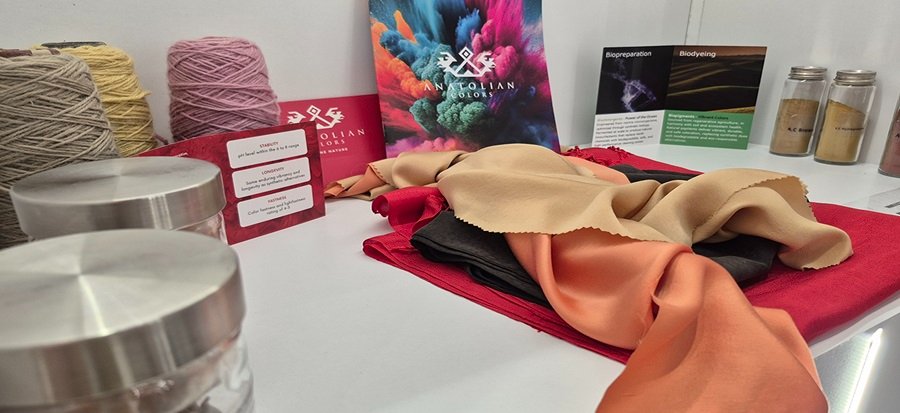
Color decisions within a circular economy
Tones derived from natural pigments can offer both technical and aesthetic compatibility when applied to recyclable fabrics. Maintaining color durability is critical, as it enables products to be reintegrated into reuse and recycling processes without compromising quality.
The relationship between color and perception
Color is a powerful tool that directly shapes consumer perception. Brands embracing sustainable production often gravitate towards soft, balanced tones inspired by nature. Greens, earthy hues and neutrals evoke values such as closeness to nature, simplicity and environmental awareness.
Innovation in color technologies
Technological advancements are transforming the role of color in textiles. Heat-sensitive, light-reactive and environmentally responsive color technologies are turning textiles from static surfaces into interactive experiences.
The future of sustainable colors
The future of color in textiles depends on how closely it integrates with sustainability and innovation. The wider adoption of natural dyes, the development of color systems compatible with recyclable materials and the evolution of consumer awareness will position color as an active component of the industry’s sustainable transformation.